
Awlgrip Topcoat Application Guide
Complete professional guide covering Awlgrip Brush & Roll, Awlgrip Spray, Awlcraft 2000, Awlcraft 3000, Awlcraft SE, and Awlgrip HDT systems. Learn surface preparation, reducers, spray setup, environmental conditions, application methods, cure schedules, troubleshooting, and professional yacht finishing techniques.
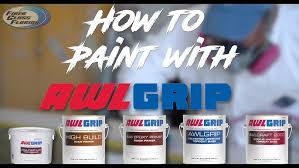
Choose The Right Awlgrip Topcoat System
Not every Awlgrip coating system is designed for the same purpose. Some systems prioritize ultimate durability and chemical resistance, while others focus on repairability, color depth, metallic effects, or high-production spray application. Understanding the differences between Awlgrip Topcoat, Awlcraft 2000, Awlcraft 3000, Awlcraft SE, and Awlgrip HDT is critical before starting your project.
Awlgrip Topcoat System Breakdown
Every coating system has different strengths depending on whether your priority is repairability, gloss retention, buffability, production speed, metallic effects, or maximum durability.

Awlgrip Topcoat
Traditional Awlgrip linear polyurethane remains one of the most durable yacht finishes available. It is highly chemical resistant and ideal for long-term exterior exposure.
- Best gloss retention and chemical resistance
- Excellent for yachts, towers, hulls, and commercial marine use
- Can be sprayed or brush & rolled
- Not designed to be buffed aggressively
- Professional spray setup strongly recommended

Awlcraft 2000
Awlcraft 2000 offers easier repairability and polishability compared to traditional Awlgrip Topcoat systems.
- Buffable and repairable finish
- Ideal for refit and repair environments
- Excellent gloss and DOI
- Spray application only
- Preferred by many yacht refinishers

Awlcraft 3000
Awlcraft 3000 combines the repairability of Awlcraft 2000 with enhanced color technology and deeper, richer colors. :contentReference[oaicite:0]{index=0}
- Buffable and repairable
- Enhanced color platform
- Fast drying and easy to spray
- Excellent metallic and dark color performance
- Compatible with multiple reducer speeds

Awlcraft SE
Awlcraft SE is designed for metallics, pearls, and effect colors using a basecoat-clearcoat system. :contentReference[oaicite:1]{index=1}
- Exceptional metallic control
- Used with clearcoat systems
- Fast flash times
- Designed for premium yacht refinishing
- Spray application only

Awlgrip HDT
Awlgrip HDT provides premium DOI, UV resistance, and long-term gloss retention for high-end marine finishing systems.
- Outstanding depth of image
- Excellent UV durability
- Designed for premium yacht applications
- Works with Awlcraft SE systems
- Professional spray environment recommended
Awlgrip vs Awlcraft Comparison
| Feature | Awlgrip Topcoat | Awlcraft 2000 | Awlcraft 3000 | Awlcraft SE + HDT |
|---|---|---|---|---|
| Application Method | Spray or Brush/Roll | Spray Only | Spray Only | Spray Only |
| Repairability | Limited | Excellent | Excellent | Excellent |
| Buffable | No | Yes | Yes | Yes |
| Gloss Retention | Excellent | Excellent | Excellent | Premium |
| Metallic Colors | Limited | Moderate | Very Good | Best |
| Brush & Roll | Yes | No | No | No |
| Professional Spray Finish | Excellent | Excellent | Excellent | Show Quality |
Professional Awlgrip Application Process
A professional Awlgrip finish depends more on preparation and environmental control than simply spraying paint. Most failures originate from contamination, incorrect flash times, poor reducer selection, or improper surface preparation.
Surface Preparation
Degrease thoroughly using the two-cloth wipe method, remove contaminants, and sand substrate to recommended grit profile before priming.
Prime & Fair
Apply 545 Epoxy Primer, High Build, or Ultra Build systems to create a stable, sealed, fair substrate.
Environmental Control
Monitor humidity, temperature, and dew point before application. Avoid condensation and unstable shop conditions.
Reducer Selection
Select proper reducer speed based on temperature, airflow, and panel size to optimize flow and atomization.
Application
Apply proper wet film thickness with correct overlap, gun distance, flash times, and spray pressure.
Cure & Finish
Allow proper cure cycles before sanding, buffing, assembly, or exposure to heavy service conditions.
Common Awlgrip Topcoat Problems
Why is my Awlgrip finish dull or hazy?
Gloss loss is commonly caused by incorrect reducer selection, excessive humidity, contamination, dry spray, or improper flash times between coats.
Can you buff Awlgrip Topcoat?
Traditional Awlgrip Topcoat is not designed for aggressive buffing. Awlcraft 2000 and Awlcraft 3000 are repairable and buffable systems.
What temperature should you spray Awlgrip?
Most applications perform best between 70°F and 90°F with controlled humidity and stable dew point conditions.
What causes solvent pop?
Solvent pop typically occurs when coatings trap solvents due to excessive film build, improper flash time, or spraying in overly hot conditions.
What reducer should I use?
Reducer selection depends on temperature, airflow, humidity, and panel size. Fast reducers help cooler environments while slower reducers improve flow in hot conditions.
Need Help Choosing An Awlgrip System?
Fiberglass Florida stocks Awlgrip Topcoat, Awlcraft 2000, Awlcraft 3000, Awlcraft SE, reducers, converters, primers, spray supplies, and professional marine refinishing materials. Our team works with boatyards, yacht refit facilities, production builders, and DIY customers throughout Florida and beyond.
Validate your login