
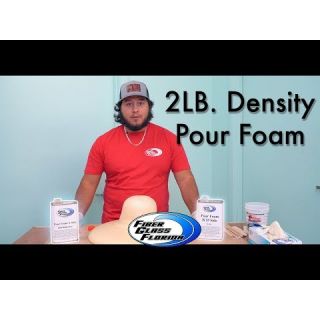
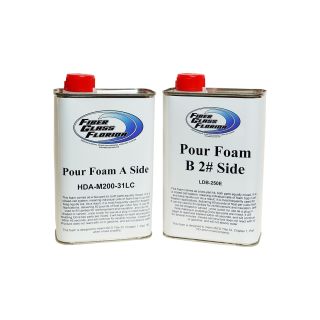

2 lb vs. 4 lb Marine Pour Foam
The density identifies the approximate weight of one cured cubic foot. Higher-density foam is firmer and more compression resistant, but it expands less from the same quantity of liquid.
| Foam Density | Gallon-Kit Yield | Best Uses | Key Benefit |
|---|---|---|---|
| 2 lb | Approximately 9 ft³ | Boat flotation, insulation and lightweight cavity filling | Maximum expansion with minimal added weight |
| 4 lb | Approximately 4.5 ft³ | Firmer void filling and areas needing greater compression resistance | Denser cured foam with increased durability |
A gallon kit contains 1 gallon of Part A and 1 gallon of Part B. Mix at a 1:1 ratio by volume. Actual yield varies with material temperature, ambient conditions, mixing quality and application technique.
Common Marine Applications
- Boat hull flotation compartments
- Pontoons, docks and small watercraft
- Insulation and lightweight void filling
- Fiberglass molds and free-form shapes
Before Mixing
- Measure the cavity and calculate its cubic volume
- Prepare equal volumes of Part A and Part B
- Protect nearby surfaces and wear appropriate PPE
- Leave adequate room for expansion and use controlled lifts
How Much Expanding Foam Do You Need?
Use the Fiberglass Florida calculator for rectangular cavities, round pontoons, pipes or a known cubic-foot volume. It estimates the complete gallon kits and individual gallons of Part A and Part B required.
Calculate Your Pour FoamMarine Pour Foam Questions
Which density should I use for boat flotation?
Two-pound foam is the standard choice for most flotation compartments because it provides approximately 60 lb of theoretical buoyancy per cured cubic foot while adding minimal weight. Choose 4 lb foam when a firmer and more compression-resistant fill is required.
Is closed-cell pour foam completely waterproof?
Closed-cell polyurethane foam resists water absorption, but it is more accurate to call it water-resistant rather than waterproof. Repair leaks and protect the cured foam from continuous immersion whenever possible.
Can I fill a large cavity in several pours?
Yes. Controlled layers help manage expansion, reaction heat and pressure. Allow each batch to expand, firm and cool before adding the next pour.
Read the complete application guide, watch the mixing video and view all pour foam FAQs.
Please complete your information below to login.
Sign In
Create New Account