Awlgrip
Topcoat
Systems
Professional yacht finishing procedures, surface preparation standards, and complete Awlgrip system application guidance — from an authorized Florida distributor that stocks the full line.
Step-by-Step System
Awlgrip Yacht Paint Application & Technical Guides
Every stage of a professional Awlgrip job — from substrate prep through final cure — documented for Florida marine conditions.
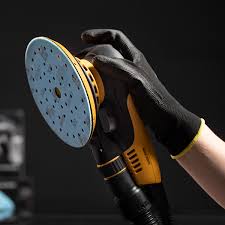
Surface Preparation
Cleaning procedures, sanding standards, two-cloth solvent wipe method, and contamination removal.
View Surface Prep Guide →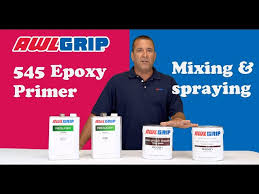
Primers & Sealers
545 Epoxy Primer, Max Cor CF, Hullgard Extra, High Build and Ultra Build primer systems.
View Primer Systems →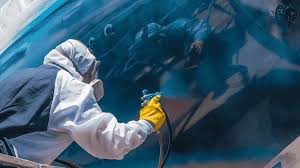
Spray Equipment Setup
Recommended tip sizes, spray pressures, gun setup and atomization for Awlgrip coatings.
View Spray Setup →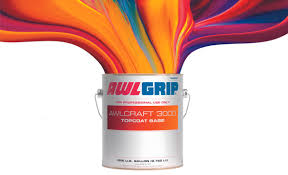
Topcoat Application
Awlgrip Topcoat vs Awlcraft 2000 vs Awlcraft 3000 vs Awlcraft SE application methods.
View Topcoat Guide →
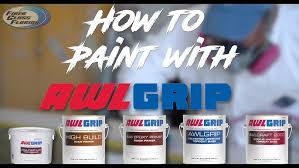
What Is the Awlgrip Paint System?
Awlgrip is a multi-component polyurethane and acrylic urethane marine coating system designed for professional yacht finishing, refit work, and OEM new builds. A complete Awlgrip job is not a single product — it is a layered system of substrate-specific cleaners, fairing compounds, epoxy primers, surfacer primers, topcoats, converters, and reducers, each engineered to work together. Skipping a required layer or using an incompatible converter is a common cause of coating adhesion, curing, and finish failures.
At Fiberglass Florida, we stock the full Awlgrip line and ship statewide from Brevard County. This guide walks through how the system fits together, which products to choose for fiberglass, gelcoat, aluminum, and previously painted substrates, and the mix ratios, recoat windows, and environmental conditions that determine whether your finish lasts twelve months or twelve years.
The Six Stages of an Awlgrip Job
- Surface preparation — Degrease, sand to substrate-correct grit (P150–P220 on fiberglass before 545 Epoxy Primer), and finish with the two-cloth solvent wipe method using Awlprep Plus T0115.
- Fairing — On jobs that need fairing, prime first: Awlfair LW (D8200 base + D7200 Standard or D7222 Fast Converter, mixed 1:1 by volume) is applied over prepared Awlgrip epoxy primer — directly onto Hullgard Extra, or onto sanded High Build on fiberglass — never onto bare substrate. Do not add solvents or reducers to Awlfair. Shape and block-sand with 36–80 grit, then seal with High Build or Ultra Build surfacer before moving on, to prevent print-through.
- Priming — 545 Epoxy Primer for adhesion and corrosion protection, following High Build or Ultra Build surfacer primers on faired surfaces.
- Topcoat — Awlgrip Topcoat (linear polyurethane), Awlcraft 2000 (acrylic urethane, repairable), Awlcraft 3000 (high-gloss acrylic urethane), or Awlcraft SE (spray-only effect basecoat that must be finished with Awlcraft 2000 Clear or Awlgrip HDT Clearcoat).
- Cure — Allow proper through-cure based on temperature, humidity, and dew point. Recoat windows are not optional.
- Finish — Optional buff, polish (Awlcraft 2000/3000 only — Awlgrip Topcoat is not buffable), or non-skid (Griptex) application for deck areas.
Awlgrip Topcoat Comparison: Which One Do You Need?
This is the single most asked question we get. The four common topcoats — Awlgrip Topcoat, Awlcraft 2000, Awlcraft 3000, and Awlcraft SE — look similar on a spec sheet but behave very differently in real refit and repair work. Here is the quick-reference table.
| Property | Awlgrip Topcoat | Awlcraft 2000 | Awlcraft 3000 | Awlcraft SE |
|---|---|---|---|---|
| Chemistry | Linear polyurethane | Acrylic urethane | Acrylic urethane (premium) | Effect basecoat — requires clearcoat |
| Best for | Maximum durability, commercial | Yacht refit, repairable finishes | Premium yacht topsides, custom color | Metallic, pearl & special-effect colors under clearcoat |
| Repairable / buffable | No (must recoat) | Yes | Yes | Via its clearcoat layer |
| Gloss / DOI | Excellent | Very good | Very high, enhanced color depth | Deep wet look — gloss comes from the clearcoat |
| Spray converter & mix | Awlcat #2 (G3010) — 1:1 by volume | Awlcat #2 (G3010) — 2:1 by volume | Awlcat #2 (G3010) — 2:1 by volume | OG3010 — 100:15 by volume, then 2 coats Awlcraft 2000 Clear or Awlgrip HDT Clear |
| Brush converter | Awlcat #3 (H3002) | Spray only | Spray only | Spray only — must be clearcoated |
How to Choose
- Choose Awlgrip Topcoat if you want maximum film hardness and chemical resistance and you are willing to fully recoat to repair damage.
- Choose Awlcraft 2000 if you want a yacht-grade finish that can be locally repaired, sanded, and buffed without recoating the entire panel — the standard choice for most refits.
- Choose Awlcraft 3000 if you want the deepest color and enhanced gloss Awlgrip's acrylic urethane line offers, especially for darker colors and custom matches.
- Choose Awlcraft SE when the job calls for metallic, pearl, or special-effect color. SE is a spray-only basecoat/clearcoat system: the SE coat delivers color and effect, then 2 full coats of Awlcraft 3000 Clear or Awlgrip HDT Clearcoat deliver the gloss and protection. The clearcoat is not optional — plan it within 1 hour to 3 days of the basecoat.
System-At-A-Glance: Mix Ratios & Recoat Windows
Quick reference for the most common mix ratios and recoat windows in the Awlgrip system. Always verify against the current TDS for the specific product and lot you are using — these are the values our customers ask about most often.
545 Primer Mix
1 part base(D8001) or (D1001) : 1 part converter(D3001), by volume, Induction time 15 minutes.
Awlgrip Spray Mix
1 base : 1 Awlcat #2 (G3010), reduced to 11–14 sec DIN4 / 16–18 sec Zahn
Awlgrip Brush/Roll Mix
2 base : 1 Awlcat #3 (H3002) : ⅓–1 T0031 reducer
Sanding Before 545
P150–P220 on fiberglass, blocked uniform tooth
Sanding After 545
280–400 grit before topcoat; sand between topcoats only if the 24-hour recoat window has passed
Griptex Spray Add
8–10 oz per gallon of mixed Awlgrip / Awlcraft 2000
Solvent Wipe Method
Two-cloth method: Awlprep Plus T0115, wet wipe + dry wipe
Environmental Window
Surface ≥5°F above dew point. Ambient 55–105°F for Awlgrip Topcoat, Awlcraft 2000/3000 & 545. Awlcraft SE: 70–90°F.
Substrate-Specific Awlgrip Systems
The correct Awlgrip system depends on what you are painting over. Each substrate has its own prep, primer, and adhesion requirements:
Common Awlgrip Questions
What is the mix ratio for Awlgrip Topcoat when spraying?
What is the mix ratio for Awlgrip when rolling and tipping?
What grit do I sand to before applying Awlgrip 545 Primer?
What is the difference between Awlcraft 2000 and Awlcraft 3000?
Can Awlgrip Topcoat be repaired and buffed?
What is the two-cloth solvent wipe method?
How do I apply Griptex non-skid with Awlgrip?
Where can I buy Awlgrip in Florida?
Ready to Spec Your Awlgrip Job?
Browse the full catalog or get a system recommendation from our technical team before you buy.
Please complete your information below to login.
Sign In
Create New Account