
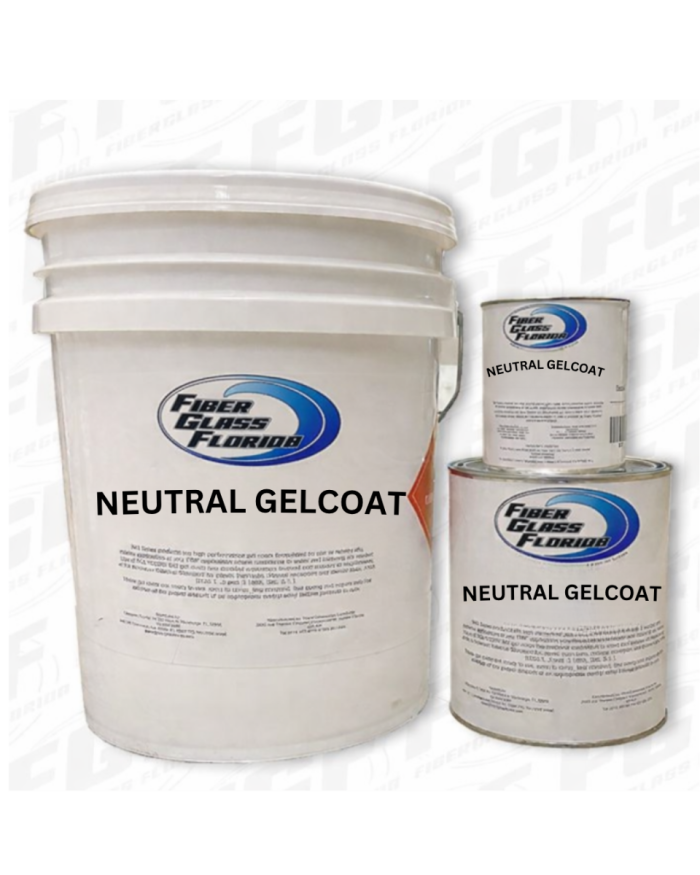
Neutral Gelcoat - Tintable Marine Gelcoat Base
Neutral Gelcoat is a tintable gelcoat base used for fiberglass repairs, composite parts, mold work, and color adjustments with polyester pigments. Available by the quart or gallon. MEKP catalyst, pigments, and wax additive may be sold separately depending on the application.
Neutral Gelcoat - Tintable Base
Neutral gelcoat is a tintable gelcoat base used for fiberglass repair, marine repair, composite work, mold applications, and custom color adjustments. It is commonly used when a neutral starting base is preferred for adding polyester pigments instead of starting with white gelcoat.
This product is available in both quart and gallon sizes. Select the size needed before adding it to your cart.
Quick Answer: What Is Neutral Gelcoat Used For?
Neutral gelcoat is used as a tintable base when you want to build or adjust a gelcoat color with compatible polyester pigments. It is especially helpful for darker, richer, or more saturated colors where white gelcoat may make the final color too light, chalky, or pastel.
Why Use Neutral Gelcoat Instead of White Gelcoat?
White gelcoat is already pigmented white, which makes it useful for white repairs, off-whites, creams, and lighter colors. Neutral gelcoat gives you a cleaner starting point when trying to build certain darker or stronger colors with pigments.
For example, a navy blue gelcoat would usually start with blue or dark blue pigment in a neutral base. A small amount of black pigment may be used to deepen the blue and push it toward navy. In some cases, a very small amount of red may be used to shift or warm the blue tone. The exact adjustment depends on the base, pigment strength, film thickness, and the final color you are trying to reach.
This is why neutral gelcoat is often used for color work where the final shade needs to be adjusted carefully instead of simply adding one pigment and calling it done.
Common Uses
- Fiberglass and gelcoat repairs
- Marine repair and refinishing work
- Composite parts and mold work
- Custom-tinted gelcoat using polyester pigments
- Color adjustments when white gelcoat is not the best starting point
- Repair work on boats, RVs, tubs, showers, pools, and fiberglass parts
Tinting Neutral Gelcoat With Pigments
Neutral gelcoat can be tinted with compatible polyester pigments. Add pigment slowly and mix thoroughly until the desired color is reached. For best results, make a small test batch, allow it to cure, and check the color before applying it to the final repair area.
Browse available gelcoat pigments and color additives to adjust white, neutral, and colored gelcoat.
How Different Pigments Change Gelcoat Color
- White pigment can lighten a color and improve hiding power.
- Black pigment darkens colors quickly and can push colors toward gray, navy, or deeper tones.
- Blue pigment builds blue, navy, teal, gray-blue, and cooler marine colors.
- Red pigment adds warmth, depth, and can shift colors toward orange, burgundy, maroon, or purple tones.
- Yellow pigment warms colors and helps build cream, tan, gold, beige, and some green shades.
- Green pigment can be strong and should be added carefully when building seafoam, teal, or darker green colors.
- Brown or oxide pigments can help create tans, beige, earth tones, and warmer off-white colors.
- Metallic or effect pigments may behave differently than standard pigments and should be tested before use.
Common Boat Colors and Starting Points
These are general starting points only. They are not exact formulas. Pigment strength, gelcoat base, film thickness, cure, sanding, buffing, and the age of the existing surface can all change the final color.
| Color Goal | Possible Starting Point |
|---|---|
| Bright White | Start with white gelcoat or white pigment. Warm with a small amount of yellow or mustard gold, or cool with a very small amount of black or blue. |
| Cream / Almond / Off-White | White base plus small amounts of yellow, mustard gold, brown, red, or black depending on whether the color needs to be warmer, darker, or more muted. |
| Light Gray | White or neutral base tinted carefully with black. A touch of blue can cool the gray, while a touch of yellow or red can warm it. |
| Navy Blue | Neutral base with blue or dark blue pigment. Add black slowly to deepen the color. A very small amount of red may be used if the blue needs a warmer or deeper tone. |
| Royal / Bright Blue | Neutral base with blue pigment. Add white for a lighter sky blue, or black for a darker blue. |
| Boot-Stripe Red | Neutral base with red pigment. Deep red, black, yellow, or a small amount of blue may shift the tone depending on the shade needed. |
| Green / Teal / Seafoam | Neutral base with green pigment. Blue can cool the color toward teal, while yellow can brighten or warm the green. |
| Black | Neutral base with black pigment. Add slowly because black pigment can overpower a batch quickly. |
Important Application Notes
- MEKP catalyst is required for gelcoat to cure properly.
- Polyester pigments may be used to tint or adjust the final color.
- Wax additive needed for final-coat repairs where sanding and buffing are required.
- If applying multiple coats or working in a mold, wax additive may not be needed until the final coat.
- Always make a small test batch before applying tinted gelcoat to the final repair area.
- Color results can vary based on pigment amount, surface condition, application method, film thickness, lighting, sanding, buffing, and cure conditions.
Need wax solution, Duratec High Gloss Additive, patch aid, or non-skid? View our gelcoat additives.
Color Matching Notes
If you are trying to match an existing boat, fiberglass part, or older gelcoat surface, exact color matching can be difficult. Age, sun exposure, oxidation, polishing, lighting, and previous repairs can all affect the visible color. A Hull Identification Number usually does not confirm the exact current gelcoat color on an aged or repaired boat.
Photos, phone screens, printed charts, and computer screens are helpful for discussion, but they are not exact color standards. If you are unsure which base or pigment to use, please call Fiberglass Florida before ordering.
For more help understanding color selection and repair planning, visit our Marine Gelcoat Guide.
Helpful Links
- Read our Gelcoat Guide
- Shop White Gelcoat
- Shop Gelcoat Pigments
- Shop Gelcoat Additives, Wax, Duratec, Patch Aid, and Non-Skid
- Shop MEKP Catalyst
- Restore Oxidized Gelcoat With Mirka Polarshine 35
Neutral Gelcoat FAQ
What is neutral gelcoat used for?
Neutral gelcoat is used as a tintable base for fiberglass repairs, composite work, mold applications, and color adjustments with polyester pigments.
Is neutral gelcoat the same as white gelcoat?
No. White gelcoat is already pigmented white, while neutral gelcoat is used as a base for tinting. Neutral can be a better starting point for darker colors, stronger colors, and pigment adjustments.
Can I add pigment to neutral gelcoat?
Yes. Neutral gelcoat is commonly tinted with compatible polyester pigments. Add pigment slowly, mix well, and test the color before applying it to the final repair area.
How do I make navy blue gelcoat?
Navy blue is usually built from a blue or dark blue pigment in a neutral base. Small amounts of black can deepen the blue toward navy. In some cases, a very small amount of red may be used to shift or warm the blue tone. Always test a small batch before making a larger amount.
Do I need MEKP catalyst?
Yes. Gelcoat requires MEKP catalyst to cure. Catalyst should be measured carefully based on the gelcoat being used, working conditions, and application needs.
Do I need wax additive?
Wax additive is commonly used when gelcoat is being applied as a final repair coat that needs to cure hard enough for sanding and buffing. For mold work or multiple coats, wax may not be used until the final coat.
Please complete your information below to login.
Sign In
Create New Account