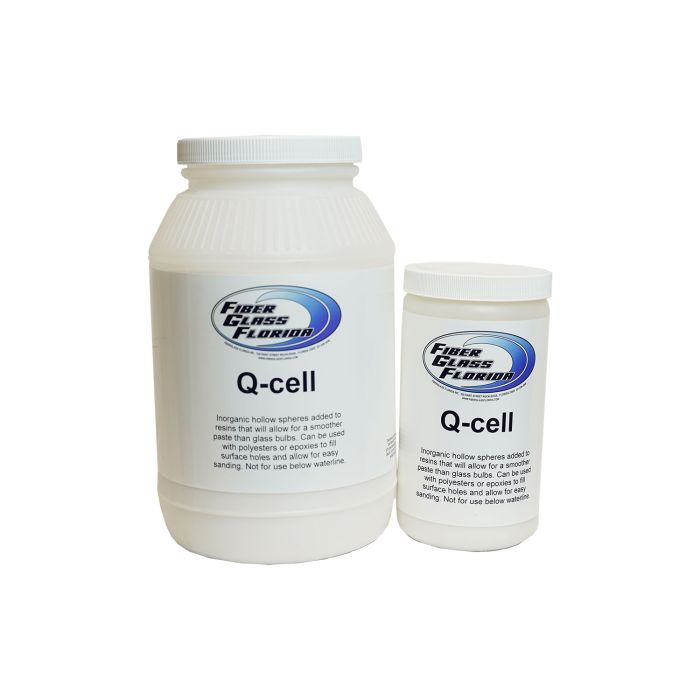
Q-Cell Lightweight Microspheres – Fairing Filler

In stock
SKU
QCell
As low as $3.85
Quick Overview

Q-Cell Lightweight Microspheres

Q-Cell is a lightweight filler that makes resins and putties easy to sand and shape. Perfect for cosmetic fairing, surfboards, and above-the-waterline marine repairs.
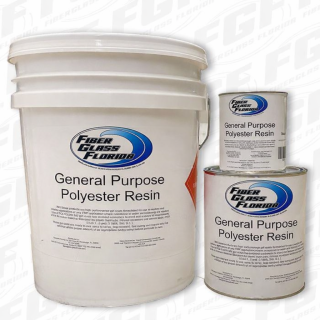
Q-Cell Filler for Fiberglass Applications

What is Q-Cell?

Q-Cell is a lightweight microsphere filler used in fiberglass repair and marine applications. It is commonly mixed with polyester resin, epoxy resin, or vinyl ester resin to create a smooth, easy-to-sand fairing compound.

How to Use Q-Cell

  • Mix Q-Cell into resin until a peanut butter consistency is reached
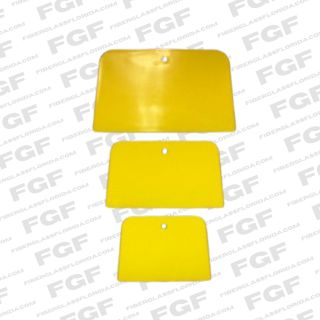
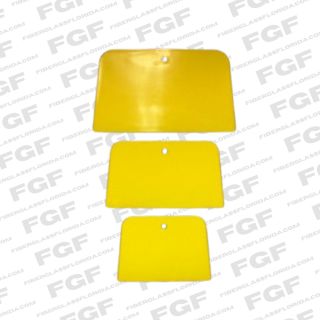
  • Apply with a spreader
  • Allow to cure fully
  • Sand smooth before priming or applying gelcoat

Best Uses for Q-Cell

  • Fairing boat hulls
  • Filling low spots in fiberglass
  • Surface smoothing before primer

Q-Cell vs Other Fiberglass Fillers

Q-Cell is best for lightweight sanding applications. For structural strength, consider other fiberglass fillers such as aerosil(cabosil) or chopped fibers.

Not sure which filler to use? See our fiberglass fillers guide comparing Aerosil, Q Cell, fairing compounds, and structural fillers →

Need Help Choosing?

Call us or email orders@fiberglassflorida.com for help selecting the right filler for your project.

More Information
ManufacturerVarious
0
Rating:
0% of 100
Write Your Own Review
You're reviewing:Q-Cell Lightweight Microspheres – Fairing Filler
Your Rating
Customer Questions
What is Aerosil used for?
Aerosil is typically used as a thixotropic agent and
reinforcement in resin or epoxy systems. It is added to
increase viscosity, prevent sagging or running, and
improve mechanical properties. Aerosil is commonly
employed in applications such...
What is Q-Cell used for?
Q-Cell, or microballoons, are hollow glass or phenolic
microspheres that are lightweight and add volume to the
resin or epoxy mixture. They are primarily used as a filler
to reduce density, increase volume, and improve
sandability. Q-Cell...
What are Milled Fibers used for?
Milled fibers are short strands of reinforcing fibers,
such as fiberglass or carbon fibers, that are finely
chopped into small lengths. They are typically added
to resin or epoxy to enhance mechanical properties,
including strength, stiffness...
How Much Does 4-Pound Pour Foam Expand and What Volume Will It Fill?
How Much Does 4-Pound Pour Foam Expand and What Volume Will It Fill? Four-pound density polyurethane pour foam is a closed-cell marine foam with greater strength and compression resistance than 2-pound foam. It is commonly used in structural applications...
Which Adtech (now Sika) filler should I use—P-11 (AP112), P-14, P-17, or P-77?
Adtech (Sika) Marine Fillers: How to Choose — P-14, P-11/AP112, P-17, P-77/AP077 Quick pick: For most boat fairing and everyday bonding, choose P-14 Ultra Filler (our top seller). Use P-11/AP112 when...
What products can I use to fair my boat?
Lightweight Fairing Putty - Uses mekp cataylst, this product will help fill in voids and high and low spots. It is easy to sand and does not gum up sand paper. It has low shrinkage and non sagging properties. Good adhesion to polyester and vinylester...
How Do I Do a Hot Coat on a Surfboard Using Silmar 249A or 249-B?
How Do I Do a Hot Coat on a Surfboard Using Silmar 249A or 249-B? A surfboard hot coat, sometimes called sand resin, is the final resin layer applied before sanding and polishing. It’s made by mixing Silmar 249A or 249-B
How do I catalyze and use F206 LF/LM Fairing Compound, and what’s the working time?
Full answer (mixing, temperature, and application details) Catalyst & ratio: F 206 is formulated for MEKP; use 1–2% total MEKP at room temp, with 1.0% recommended...
What is Reichhold Gloss Resin used for?
Reichhold Gloss Resin is a polyester finishing resin specifically formulated for surfboard gloss coats and marine fiberglass surfacing. Unlike laminating resin, it contains a built-in surfacing agent that allows it to cure tack-free in air, making it...
Marine Pour Foam – Mix Ratios, Expansion Volumes, and Density Guide
Marine Pour Foam – Mix Ratios, Expansion Volumes, and Density Guide Marine pour foam, also called expanding foam, is a two-part closed-cell polyurethane foam used for flotation, insulation, and cavity filling. At
Please, mind that only logged in users can submit questions

Downloads

TDS Technical Data Sheet

  • pdf Q Cell Size: (328.44 KB)  Downloads: 2