

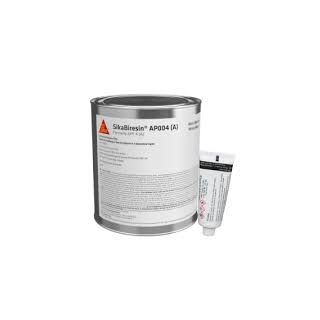
SikaBiresin AP017 Styrene-Free Polyester Filler – Formerly Adtech P-17 High-Temp Repair Putty
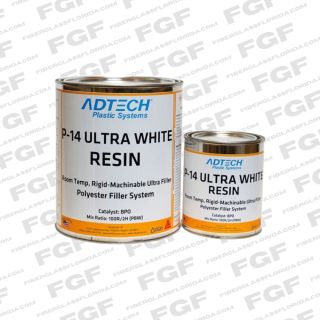
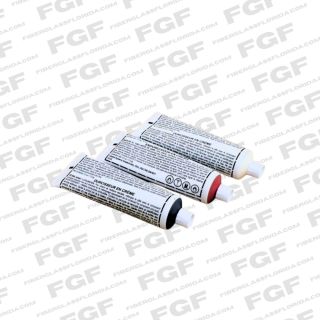
Adtech P-17 — now part of the SikaBiresin product line — is a two-component, BPO-catalyzed polyester structural filler and adhesive paste engineered for high-strength bonding and filling on composite, FRP, and metal substrates. P-17 shares the same 100:2 mix ratio (paste to BPO cream hardener) as the Adtech P-14 Ultra Filler but is formulated for applications where higher structural integrity and gap-filling capability are needed. It sands cleanly, accepts all standard topcoat systems, and resists moisture absorption for above- and below-waterline marine use. If you previously used Adtech P-17, the SikaBiresin equivalent delivers the same proven performance under the updated Sika branding.

Adtech P-17 / SikaBiresin Structural Filler & Adhesive — Technical Product Description
Adtech P-17 has been transitioned into the Sika Advanced Resins product family. Axson Technologies, which originally manufactured the full Adtech line including P-14, P-17, and P-77, was acquired by Sika. The formulations, performance benchmarks, and application procedures remain consistent. Customers who have used Adtech P-17 can continue using the SikaBiresin equivalent without changes to their mixing procedures or finishing systems.
What Is P-17?
P-17 is a two-component polyester structural filler and bonding paste positioned between the lightweight finishing characteristics of P-14 and the extreme-temperature tolerance of P-77 (AP077). It is designed for applications requiring a combination of dimensional stability, structural fill depth, and compatibility with all standard marine and industrial topcoat systems. P-17 works effectively on fiberglass, FRP, SMC, epoxy composites, Kevlar, carbon fiber, aluminum, and wood substrates.
Key Performance Properties
- Mix ratio: 100 parts paste to 2 parts BPO cream hardener, by weight
- Consistency: Thixotropic paste — non-sagging on vertical surfaces
- Cure profile: Tack-free within minutes at 77°F; sandable within 15–30 minutes
- Hardness: Shore D 85+ fully cured
- Shrinkage: Minimal — no sink or void after cure
- Moisture resistance: Low water absorption; suitable for above and below waterline
- Topcoat compatibility: Lacquer, enamel, polyurethane, epoxy, gelcoat
- Shelf life: 1 year unopened; store below 80°F
Compatible Substrates
P-17 bonds to fiberglass, SMC, FRP, epoxy glass laminates, carbon fiber, Kevlar, aluminum, steel, wood, plaster, and most tooling and pattern materials.
Typical Applications
- Marine structural fiberglass repair and reinforcement
- Deep void and gap filling in composite panels
- FRP and SMC structural bonding and repair
- Core material edge sealing and filling
- Tooling and mold repair requiring dimensional strength
- Fairing and surface preparation prior to painting or gelcoat
- Honeycomb and sandwich panel edge treatment
- Bonding structural inserts and hardware backing plates
Application Instructions
- Prepare the repair area: clean, degrease, abrade, and allow to dry completely before applying.
- Stir the paste thoroughly before dispensing.
- On a clean, disposable surface, dispense 100 parts paste and 2 parts BPO cream hardener by weight.
- Blend for 60–90 seconds, scraping edges to ensure uniform mix.
- Caution: Excess hardener causes gumminess. Do not exceed the 100:2 ratio.
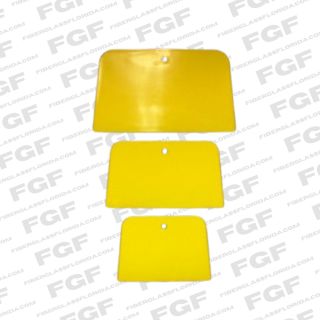
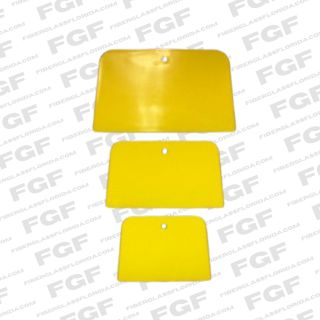
- Apply to prepared surface using a squeegee or putty knife. Work material into voids and avoid entrapping air.
- Allow to cure at room temperature. Sand, file, or machine to finished contour once firm.
- Apply primer and topcoat per the selected finish system.
Adtech P-17 vs. P-14 — Which to Choose?
P-14 Ultra Filler is optimized for lightweight surface filling, high machinability, and a very fine feathered finish. It is the preferred choice for shallow fill work, cloth impression filling, and surface porosity.
P-17 is better suited for deeper structural fills, bonding applications, and repairs where greater mechanical strength and gap-bridging are needed. Use P-17 when the repair requires structural integrity beyond what a surface filler provides.
Frequently Asked Questions
What is SikaBiresin polyester filler used for?
SikaBiresin polyester filler is used for filling, fairing, sanding, and repair work on fiberglass, FRP composites, molds, patterns, panels, and marine repair surfaces.
Is this the same as the old Adtech P-series putty?
Yes. These products are now sold under the SikaBiresin name, with legacy references such as Adtech P-14, P-17, or P-77 included to help customers identify the correct replacement product.
Can this be used for fiberglass boat repair?
Yes. Depending on the specific product, SikaBiresin polyester fillers can be used for fiberglass repair, FRP composite repair, mold repair, fairing, gelcoat repair preparation, and marine service work.
Does Fiberglass Florida carry SikaBiresin fillers?
Fiberglass Florida supplies marine repair materials, composite products, fiberglass fillers, resins, gelcoats, abrasives, and repair supplies for boatyards, fiberglass shops, and marine technicians in Florida, the Caribbean, and coastal markets.
SikaBiresin has assumed the Adtech product line. Fiberglass Florida stocks both P-14 and P-17 family products. Contact us at 321-639-3046 if you need help selecting the right filler for your application.
| Manufacturer | Ad Tech Plastics |
|---|
Downloads
Default Category
-
 Adtech 17 White SDS.pdf Size: (58.71 KB) Downloads: 3

Validate your login